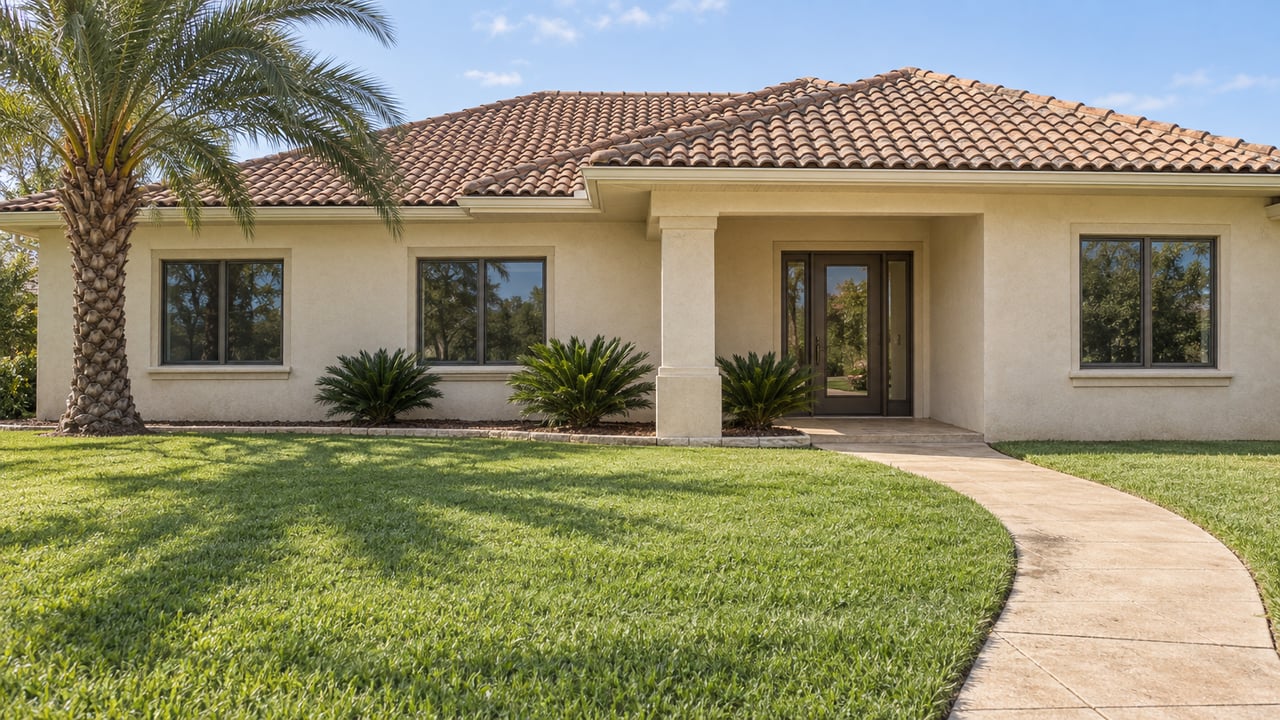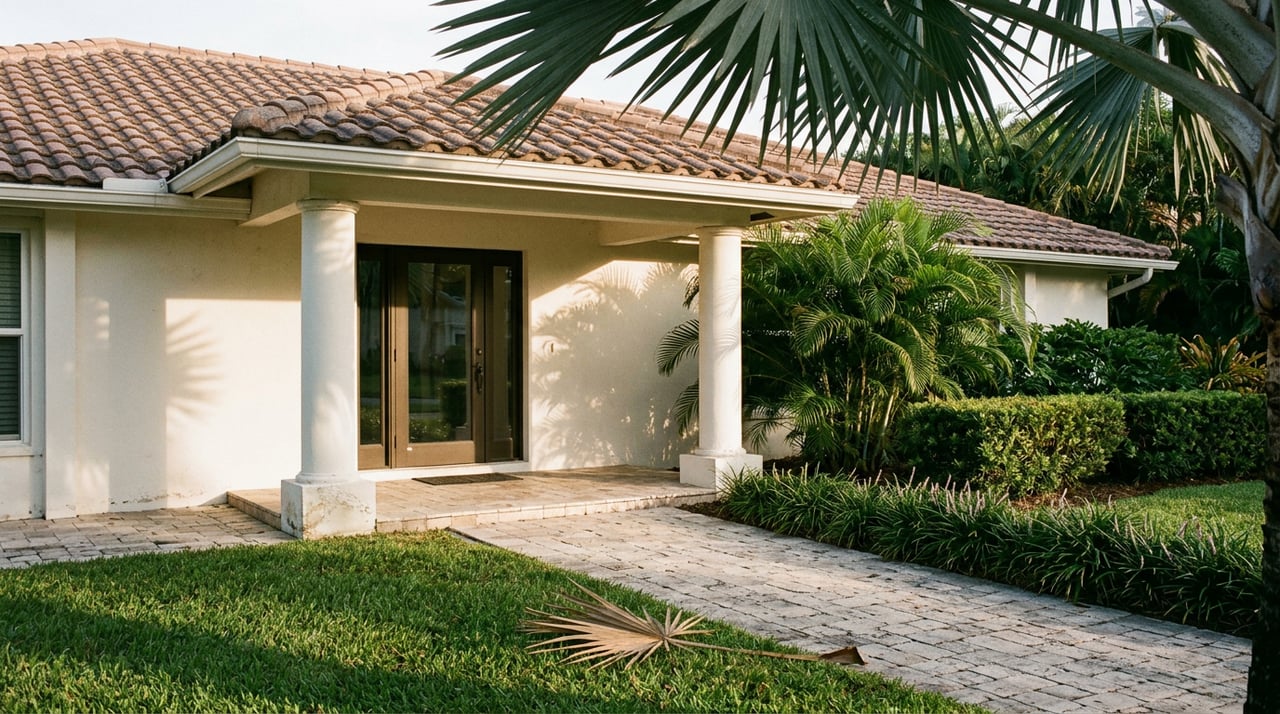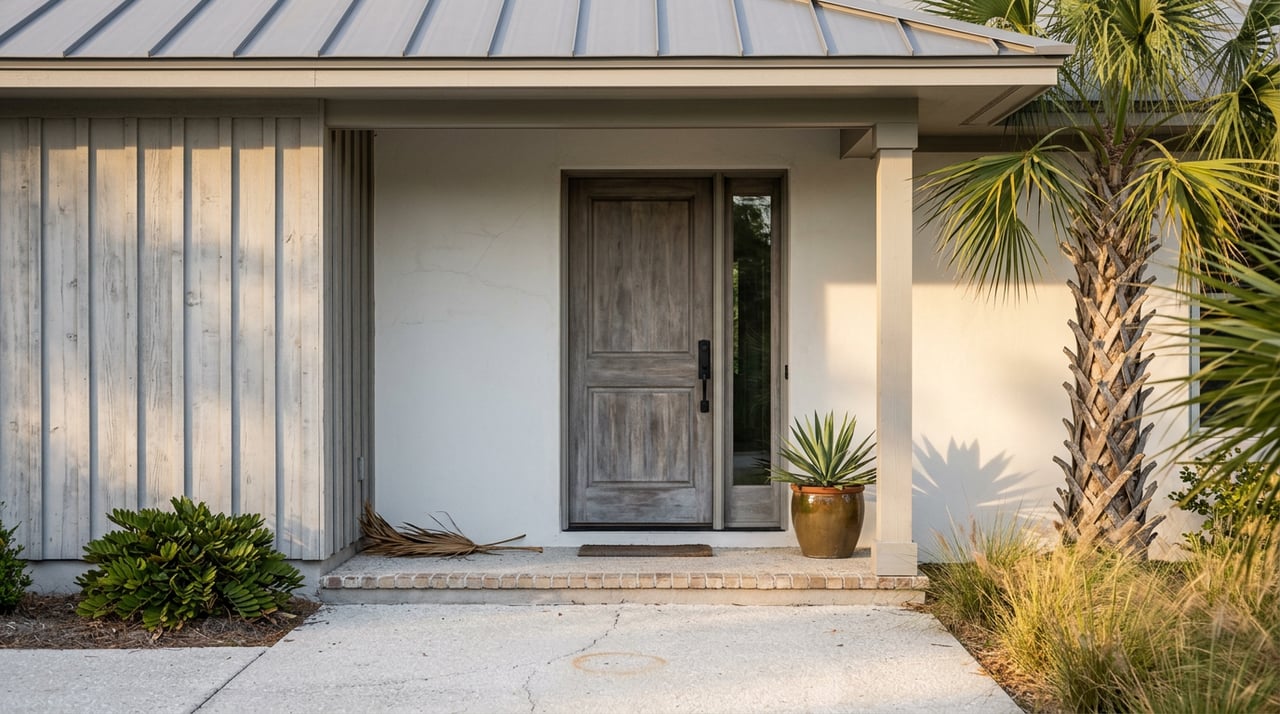
In March 2026, a five-bedroom ground-level home at 6201 Holmes Blvd went on the market in Holmes Beach for $1.45 million. Private pool, 1,822 square feet, no stairs to the front door. The local team tracking the listing called it a great starter vacation rental. Nothing about the pitch treated the home's ground-level footing as a liability to work around. It was the selling point.
That's odd, if you've read any of the dozen or so buyer guides published about Anna Maria Island since Hurricane Helene and Hurricane Milton hit the island within two weeks of each other in October 2024. The consensus across nearly all of them is the same: elevation is now the first filter buyers apply, the cost gap between older ground-level homes and newer elevated construction has widened, and ground-level properties face tougher economics across the board. It's a clean story. It's also not what closed transactions on the island actually show.
What the storms were supposed to do to this market
Helene pushed a storm surge across Bradenton Beach that residents hadn't seen since 1921, leaving condemned structures and mold-damaged homes behind it. Milton followed as a Category 3 two weeks later. The aftermath drew a real line between properties: homes built above base flood elevation with hurricane-resistant features came back on the market faster and held their price. Homes that needed post-storm renovation sat longer.
That much is true, and it's why elevation certificates, flood zone letters, and pre-offer insurance quotes became standard due diligence for anyone buying on the island in 2025 and 2026. The logical next step in the story is that ground-level homes would keep losing ground in the sales data itself, quarter after quarter, as buyers priced in the growing insurance gap and steered toward newer, compliant construction.
What the closed sales actually show
The team that publishes Anna Maria Island's monthly closed-sale newsletter ran that exact comparison after getting repeated buyer questions about it. They pulled Q2 2024, the last full quarter before Helene, against Q2 2026, nearly two years post-storm. Ground-level homes made up 38 percent of sales in that pre-storm quarter. In Q2 2026, they made up 35 percent. A three-point move. Not a sorting of the market into two tiers. A rounding error on a two-year window that included two major hurricanes.
The same comparison showed modest price-per-square-foot appreciation for ground-level sales over that period, by the newsletter's own admittedly rough method of comparing sold dollar-per-square-foot figures. Ground-level buyers, in the words of the person running the numbers, look cautious but not absent. That's a very different market than the one described in most of the buyer guides written about this exact question.
Why the insurance story hasn't shown up in the sales data yet
Three things explain the gap between the narrative and the closings.
The zone matters more than the category. Most of Anna Maria Island sits in FEMA Flood Zone AE, where a lower-elevation waterfront parcel typically runs $4,000 to $8,000 a year in NFIP premiums. Only some Gulf-front and bay-side parcels carry the steeper Zone VE designation, where premiums routinely clear $10,000 to $12,000. Treating "ground level" as one economic bucket erases that split. A ground-level cottage two streets back from the water in Zone AE and a ground-level home directly on the Gulf in Zone VE are not the same insurance bet, even though both get filed under the same headline.
The 50 percent rule does not mean a forced teardown. FEMA's own public guidance directly pushes back on that rumor. Plenty of buyers appear to be holding a ground-level property as-is rather than immediately elevating it.
Rebuild costs make the entry price gap real. Post-storm labor and material demand pushed compliant elevated new construction to $350 to $500 per square foot on the island, well above pre-2024 norms. A ground-level cottage listed at $1.05 million, like the newly renovated home at 5803 De Palmas that hit the market as a starter rental in early 2026, undercuts that rebuild math by a wide enough margin that the insurance premium gap doesn't have to close the whole distance to make the trade pencil for a buyer.
What this actually means if you're comparing the two
| Ground-level (pre-2015 construction) | New elevated construction | |
|---|---|---|
| Typical 2026 entry price | $1.05M to $1.45M for updated 3 to 5 bedroom homes | Rebuild cost alone: $350 to $500 per square foot, before land |
| Flood zone exposure | Mostly Zone AE; some Gulf-front and bay-side parcels in Zone VE | Same zone rules apply |
| Typical NFIP premium range | $4,000 to $8,000/yr in AE; $10,000 to $12,000+ in VE | Lower end of the same range, sometimes $500 to $1,500 less when shopped across carriers |
The published island-wide average flood premium sits near $2,108 a year, but that number is doing a lot of hiding. It's an average across every elevation and every zone. FEMA's Risk Rating 2.0 is phasing rates toward full actuarial risk over time, and the same reporting projects the average could reach $5,793 within a decade. That phase-in is gradual by design. A buyer looking at today's premium on a ground-level home isn't seeing tomorrow's number, which is part of why the sorting predicted in 2024 hasn't fully shown up in 2026 closings. It may still come. It just hasn't arrived on schedule.
Before you write an offer either way
- Pull the elevation certificate and confirm whether the parcel sits in Zone AE or Zone VE. That single distinction moves the insurance math more than the ground-level-versus-elevated label does.
- Get a written flood insurance quote before you go under contract, not after. A quote that comes back thousands higher than expected has killed deals late in escrow on this island before.
- Ask for permit records on any storm repairs made since October 2024. The paper trail is what protects you at closing.
- If you're buying a ground-level home you intend to eventually remodel, consider the costs before you fall in love with a scope of work.
Worth holding loosely: the aggregate market cooled sharply in July 2026, with inventory absorption jumping from 9.1 months to 14.8 months in a single month and sales roughly halving from the pace set earlier in the year. Two years of closed data say ground-level homes haven't lost the war the narrative predicted. That's a read on what already happened, not a promise about what happens next if the island's broader demand keeps softening.
FAQ
Does this mean ground-level homes are a safe long-term bet on Anna Maria Island? The closed-sales data says they've held a steady share of the market through two hurricane seasons, not that the insurance and flood risk are gone. Zone, elevation, and your own renovation plans still determine your real cost of ownership.
What's the practical difference between Zone AE and Zone VE for a buyer? Zone AE covers most of the island. Zone VE, found on some Gulf-front and bay-side parcels, carries a materially higher premium. Ask for the flood zone determination on any specific address before assuming based on the neighborhood.
If you're weighing a ground-level cottage against new elevated construction on Anna Maria Island, or trying to figure out what a specific parcel's flood zone actually means for your insurance quote, that's the kind of question worth working through with someone who tracks this market month to month. The Meyer Team can walk you through the comparison on an actual address. Browse Homes to see what's currently on the island.
This article is general information, not legal, tax or financial advice. Consult a qualified professional about your situation.